
Scientific workshops and lectures
Throughout the year, Cirris’ Scientific Committee offers workshops and conferences in line with its strategic objectives. Make a habit of visiting this page! The information shared here is updated regularly. For further information : viescientifique@cirris.ulaval.ca
September 2026
Workshop on Student Scholarship Applications
Friday, September 4, 2026, 12:00 p.m. to 1:30 p.m., Room H-1500 at Cirris Hamel + Online
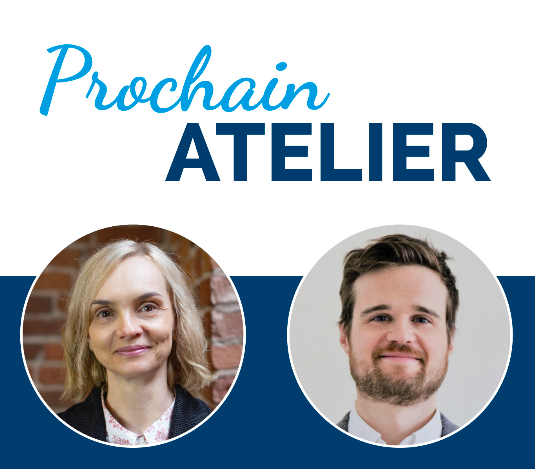
PRESENTED BY:
Louise Duchesne, researcher at Cirris and full professor in the Department of Speech-Language Pathology at the Université du Québec à Trois-Rivières
Michel-Pierre Coll, researcher at Cirris and assistant professor in the School of Psychology at Laval University
Get tips on the key elements to highlight in your grant applications! The complementary expertise of Louise Duchesne and Michel-Pierre Coll will allow us to address the expectations of major funding agencies in the fields of health, natural sciences, and engineering, as well as the humanities and social sciences.
To get the most out of the workshop, it is strongly recommended that you have already created your applications on the funding agencies’ platforms and begun drafting the various sections of your application. Time for discussion and questions is also scheduled.
Accessible Aviation in Brazil: A Methodological Framework for Systemic Airport Accessibility Evaluation
Thursday, September 10, 2026, 12:15 p.m. to 1:30 p.m., Room H-1500 at Cirris Hamel + Online
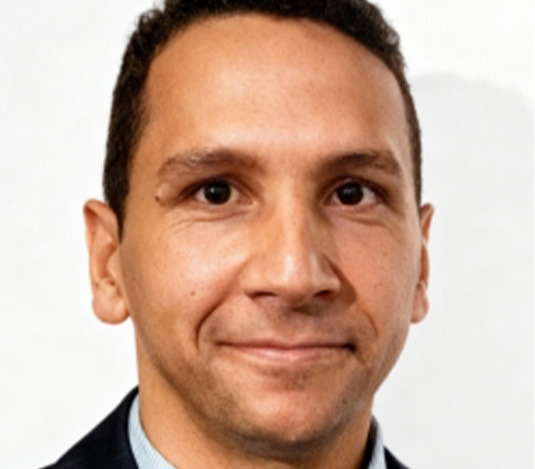
PRESENTED BY:
Prof. Luiz Tonin
Department of Production Engineering
Federal University of São Carlos (UFSCar), Brazil
INVITED BY:
Prof. Ernesto Morales
Researcher at Cirris,
Full Professor at the School of Rehabilitation Sciences, Laval University
The Accessible Aviation project is a national initiative launched through a partnership between the Brazilian Ministry of Ports and Airports (SAC/MPOR) and the Federal University of São Carlos (UFSCar). This project proposes a systemic methodology aimed at assessing and improving accessibility at airports, based on human-centered ergonomics. Rather than focusing exclusively on physical infrastructure, this framework examines how accessibility results from the interaction between regulations, operational practices, airport staff, airlines, and passengers with various disabilities and mobility needs.
Since 2019, the project has conducted field assessments at 69 Brazilian airports, representing approximately 99% of the country’s passenger traffic. The methodology evaluates 92 accessibility practices grouped into four dimensions: management, communication, mobility, and usage. Performance is assessed using three complementary indicators—Adherence, Relevance, and Effectiveness—which combine technical compliance with direct user feedback and operational performance.
The presentation will describe the methodological framework, the evaluation process, and the practical tools developed by the project, including the national accessibility certification program, a digital management platform, an accessibility manual, staff training protocols, and guidelines for assisting neurodivergent passengers. Finally, it will discuss how this experience contributes to a more inclusive society.
Luiz Antonio Tonin is an associate professor in the Department of Production Engineering at the Federal University of São Carlos (UFSCar) in Brazil, where he coordinates the bachelor’s program in production engineering. He is also a researcher at PSPLab/SimuCAD and holds a Ph.D., a master’s degree, and a bachelor’s degree in production engineering from UFSCar.
His research focuses on accessibility, ergonomics, human-centered design, and the development of inclusive work environments and public spaces. Since 2024, he has been coordinating the “Accessible Aviation” project, a national initiative funded by the Brazilian Ministry of Ports and Airports that has established a standardized methodology for evaluating and certifying accessibility at Brazilian airports. His research combines ergonomic analysis, participatory design, and engineering methods to promote universal accessibility and improve the autonomy, ease of use, and safety of people with disabilities and limited mobility.